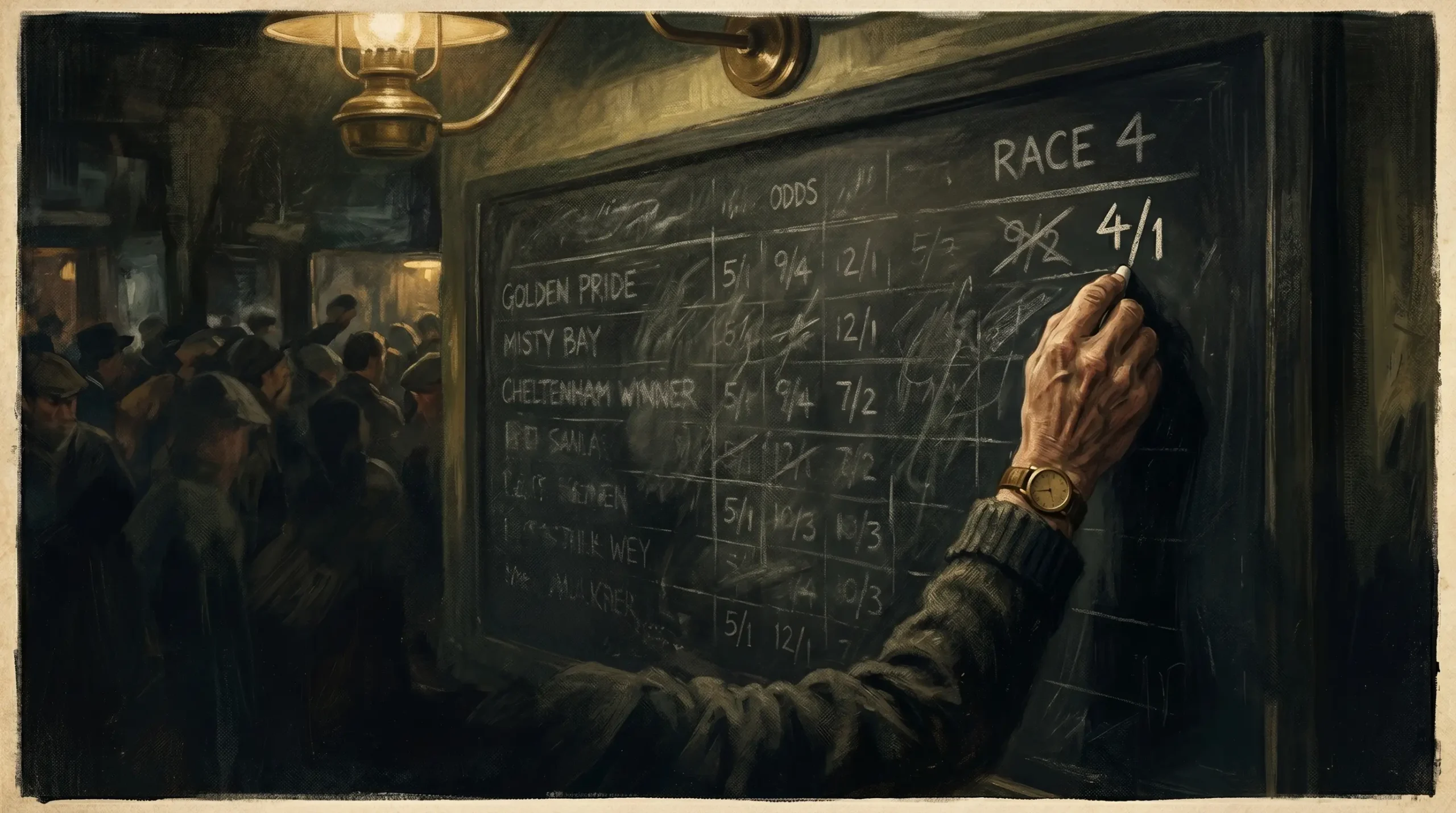
The on-course betting ring tells you what the public thinks in the final fifteen minutes before a race. The ante-post market tells you what a handful of well-informed people decided months ago, before the public had even glanced at the card. For anyone interested in how genuine intelligence moves through racing, the ante-post market is the most revealing place to look — because it is where money is committed when conviction is at its highest and the price has yet to be corrected.
Ante-post betting means backing a horse weeks, sometimes months, ahead of the race, long before final declarations. The risk is obvious: a horse may not run at all, and the stake is usually lost if it doesn’t. But that same risk is precisely what makes the ante-post market so honest. Nobody commits serious money to a horse that might never line up unless they hold a strong view about both its ability and its likely participation. Casual punters rarely bother. The result is a market shaped disproportionately by connections, professional layers, and those with a genuine reason to be early.
Why Early Money Matters More
We’ve discussed elsewhere how early market moves tend to carry more information than late support. The ante-post market is that principle in its purest form. A horse that contracts steadily in the ante-post lists over several weeks — quietly, without an obvious public catalyst — is telling you something that the day-of-race market often won’t reveal until the prices have already adjusted.
The reason is structural. Bookmakers price ante-post markets cautiously and with limited liability appetite. When informed money arrives, it arrives against thin books and tentative prices. A trainer confident that a horse is being primed for a particular target, or connections who have watched a young horse work exceptionally on the gallops through the winter, can secure value in the ante-post market that simply will not exist once the wider public arrives on raceday. They take the price early precisely because they expect it to be gone later.
This is the quiet end of racing intelligence. There is no drama, no steamer flashing across the exchange in the final minutes — just a price that was 16/1 in January and is 8/1 by March, with no headline to explain the difference. Those gradual, unexplained contractions are among the most reliable signals in the sport.
The Festival Ante-Post Market: A Case Study in Stable Confidence
Nowhere is ante-post intelligence more concentrated than in the long build-up to the Cheltenham Festival. The major Festival races trade ante-post for the entire season, and the price journeys of individual horses become a slow-motion record of where serious money believes the value lies.
Irish-trained horses, in particular, often see their strongest support emerge first in Irish ante-post markets, weeks before British layers catch up. Money that appears for a Closutton or Cullentra runner months out — money that holds firm through the season rather than coming and going — usually reflects something more durable than media enthusiasm. The yards that dominate the Festival plan their campaigns with a single target in mind, and the betting often tracks that planning long before it becomes public knowledge.
The discipline is in distinguishing two different things. A horse that drifts and contracts repeatedly, bouncing around the ante-post lists, is being moved by speculation and sentiment rather than information. A horse that contracts once and then holds, or contracts steadily in one direction over many weeks, is being moved by conviction. The shape of the price journey matters more than the price itself.
Reading the Non-Runner Signal
Ante-post markets also reveal intent through absence. When a horse that has been prominent in the ante-post lists for a particular race is suddenly withdrawn — rerouted to a different target, or simply eased out of a market — that movement carries information too. Sometimes it indicates a setback. More often, with the better-planned operations, it signals that connections have identified a more favourable opportunity elsewhere and are preserving the horse for it.
The reverse is equally telling. A horse that appears unexpectedly in an ante-post market it had no prior entry for, particularly when a supplementary entry fee has been paid to get it there, is rarely a casual decision. Supplementary entries are expensive and deliberate. When connections pay to add a horse late, and the market responds with support, the two facts together usually point to genuine confidence that the opportunity justifies the outlay.
The Risk That Keeps the Market Honest
It would be a serious error to treat ante-post intelligence as a shortcut to certainty. The non-runner risk is real and unforgiving. Ground can turn, fitness can fail, a preferred target can change, and the stake is gone with the horse that never runs. This is the central trade-off of all ante-post betting, and it is why the market remains the preserve of those willing to accept that risk in exchange for a price the raceday market will never offer.
That same risk is what makes the signal trustworthy. A market this costly to be wrong in does not attract idle money. The conviction required to commit early is itself the information. As with every form of stable intelligence, the right frame is probability, not prophecy: ante-post support shifts the odds of a well-prepared horse arriving primed at its target, but it guarantees nothing. Horses are living creatures, plans change, and even the most confident connections are sometimes wrong.
What the Ante-Post Market Teaches the Patient Observer
The lesson of the ante-post market is the lesson of racing intelligence generally, only slowed down and made visible. The smartest money moves first, moves quietly, and moves on conviction rather than noise. It accepts a real cost — the chance of a lost stake — in return for a price that reflects information the wider market has yet to absorb.
For the patient observer, the ante-post lists are a months-long ledger of where genuine confidence is being placed. Read alongside solid form analysis and an understanding of how connections plan their campaigns, the steady contractions, the firm-held prices, and the deliberate late entries form a quiet narrative of intent that is written long before the public ever arrives at the racecourse.
The on-course ring will always be louder. But the real conversation, the one that matters, happened months earlier — in the ante-post market, in near silence.
Disclaimer: Gambling can be addictive and should only be undertaken responsibly by adults. Never bet more than you can afford to lose. Ante-post stakes are typically non-refundable if your selection does not run. For help with problem gambling, contact BeGambleAware (0808 8020 133) or GamCare. StableWhispers.co.uk provides information and entertainment but does not guarantee returns. All betting carries risk. 18+ only.

Leave a Reply