Stable Whispers

Expert guide to stable whispers, betting coups & inside information in British horse racing. Spot market movers and find value with racing intelligence.

  • Trainer Patterns: Reading Form Cycles, Strike Rates and Stable Confidence

    Trainer Patterns: Reading Form Cycles, Strike Rates and Stable Confidence

    Behind every horse stands a trainer, and trainers, like the horses they prepare, run in cycles. They have stables in roaring form and stables in the doldrums. They have specialities — courses they target, race types they excel at, times of year when their horses come to hand. They have habits, tells, and statistical fingerprints that, read carefully, reveal a great deal about when their runners are worth taking seriously. Understanding trainer patterns is among the most underrated skills in racing intelligence, precisely because it requires patience and study rather than a single dramatic insight.

    The form book records what horses have done. The truly attentive observer reads it also for what it reveals about the people training them — and uses that knowledge to interpret everything else.

    Stable Form: The Most Important Cycle of All

    A horse does not exist in isolation. It is one of dozens, sometimes hundreds, in a yard, and the collective health of that yard matters enormously to its chance. When a stable is in form — its runners winning, placing, performing above expectation — that buoyancy tends to lift the whole string. When a stable is out of form, even its most talented horses can run flat, often for reasons no one fully understands at the time: a virus moving quietly through the yard, a dip in the horses’ wellbeing, a problem with the gallops or the feed.

    This is why seasoned observers watch stable form as closely as individual horse form. A yard whose horses are suddenly running well below expectation — beaten favourites, listless efforts, a run of poor results across different horses and race types — is sending a warning that applies to all its runners, however good they look on paper. Conversely, a stable hitting form, with winners flowing and horses finishing their races strongly, lends confidence to every name it sends out.

    As we’ve touched on in combining intelligence with form analysis, the wellbeing of the whole yard is context that no individual form line can supply. A brilliant horse from a stable under a cloud is a very different proposition from the same horse when the yard is flying.

    The Seasonal Trainer

    Many trainers have pronounced seasonal patterns, and recognising them is straightforward once you know to look. Some yards start the turf season slowly, their horses needing a run or two to reach peak fitness, then come good as the campaign progresses. Others target the early season hard, with horses trained to be ready first time out, and tail off as rivals catch up. Some specialise in the big festivals, conditioning their best horses to peak in March or June; others quietly plunder the smaller meetings while the spotlight is elsewhere.

    A trainer known to need a run with their horses tells you that a fancied runner returning from a break may need the outing — and that its next race might be the one to note. A trainer who excels with first-time-out runners tells you the opposite: take the debut seriously, because this yard sends them out ready. These are not secrets; they are patterns visible in the record to anyone who studies it. But they shape how every individual run should be read.

    Trainer Specialities and Course Affinities

    Trainers develop specialities, and the statistics make them plain. Some excel with two-year-olds; others do their best work with staying chasers. Some have remarkable records at particular courses — a yard whose horses simply run well at a specific track, year after year, for reasons that may be as simple as a gallop that replicates the course’s demands or a travel routine that suits.

    When a trainer with a strong record at a particular course, or in a particular type of race, sends a runner to exactly that situation, the booking is worth noting. It suggests deliberate placement — the trainer playing to a known strength. As we explored in trainers known for well-executed gambles, the most astute operators understand their own strengths intimately and place horses where those strengths can be brought to bear.

    Strike Rates and What They Really Mean

    A trainer’s strike rate — the percentage of runners that win — is a useful figure, but it must be read with care. A headline strike rate across all runners tells you relatively little. The valuable numbers are the specific ones: the strike rate with first-time-out runners, with horses returning from a layoff, with runners stepping up in trip, with particular jockey bookings, at particular courses, in particular months.

    These granular figures are where trainer analysis earns its keep. A trainer with a modest overall strike rate might have an exceptional record in one specific situation — say, with horses making their handicap debut, or with runners dropping sharply in class. When a runner fits that profitable profile, it deserves far more attention than the trainer’s general record would suggest. The pattern, not the average, carries the signal.

    Particularly worth watching is the trainer who runs few horses but wins with a high proportion of them. A small yard with a strong strike rate often operates with intent — its trainer running horses only when they are ready and the opportunity is right, rather than turning out runners in volume. When such a yard produces a runner backed in the market, the combination of a purposeful stable and visible confidence is among the more interesting situations in racing.

    Jockey Bookings as a Trainer Tell

    The jockey a trainer engages is part of the pattern too, and we’ve examined this in reading jockey bookings as intelligence. When a yard goes out of its way to secure a top rider — particularly for a horse that might not, on bare form, seem to warrant it — the booking suggests the stable rates the chance highly. When a stable’s number one jockey chooses one of the yard’s runners over another, that choice reveals where the inside confidence lies.

    Trainer-jockey combinations develop their own statistics, and some partnerships are markedly more productive than the individuals’ separate records would predict. A trainer reuniting with a jockey they win with regularly, on a fancied horse, is a small alignment of signals that the attentive observer notes.

    Building the Picture Over Time

    None of this yields its value quickly. Reading trainer patterns is the patient end of racing intelligence — it rewards those who watch the same yards over months and seasons, who notice when a stable’s horses start to sparkle or fade, who build a working sense of each trainer’s habits, strengths, and rhythms. It is closer to long acquaintance than to a single tip.

    But the reward is a form of understanding that no individual race card can provide. When you know that a particular yard is flying, that it excels in exactly this type of race, that the jockey booking signals intent, and that the horse fits a profile the trainer wins with — you are reading the race with a depth the bare figures cannot reach. As ever, it remains a matter of probability rather than certainty: the best-placed horse from the hottest stable still loses more often than not. But the patient study of trainers, their cycles and their tells, is one of the surest ways to read between the lines of the form book — and to understand not just what has happened, but who made it happen, and when they are likely to do so again.


    Disclaimer: Gambling can be addictive and should only be undertaken responsibly by adults. Never bet more than you can afford to lose. For help with problem gambling, contact BeGambleAware (0808 8020 133) or GamCare. StableWhispers.co.uk provides information and entertainment but does not guarantee returns. All betting carries risk. 18+ only.


  • Drifters and Steamers: A Field Guide to Price Movement Before the Off

    Drifters and Steamers: A Field Guide to Price Movement Before the Off

    A betting market is never still. From the moment prices are first posted to the instant the stalls open, every horse’s odds are in quiet, constant motion — shortening here, lengthening there, responding to forces the casual punter rarely pauses to consider. Most of that movement is noise. But within it are two patterns that carry genuine meaning, and learning to tell them apart is one of the foundational skills of reading a racing market. They are the steamer and the drifter — the horse coming in, and the horse going out.

    This is a field guide to both: what they are, what causes them, and crucially, when they are worth heeding and when they are merely the market breathing.

    The Steamer: A Horse Coming In

    A steamer is a horse whose price contracts sharply — sometimes dramatically — in a short space of time. A morning price of 8/1 becomes 9/2 by midday and 3/1 by the off. The horse is being “steamed in,” driven shorter by weight of money arriving faster than the market can comfortably absorb.

    Steam is the market’s most visible expression of confidence. When money arrives in volume and with urgency — overwhelming the available resistance and forcing the price down — it suggests that a significant number of people, or a small number of significant people, want to be on this horse and want to be on now. As we’ve explored in our discussion of market movers and steam moves, the most telling steamers are those driven by coordinated, sizeable money rather than a gradual public drift toward a fashionable name.

    But not all steam is equal, and this is where the field guide earns its keep:

    Informed steam moves early and decisively. It arrives when markets first open, often before the public has engaged, and it holds — the price contracts and stays contracted. This is the signature of money that knows something, or at least believes it does with conviction.

    Public steam arrives late and noisily, typically driven by a media tip, a fashionable trainer or jockey, or a bandwagon effect where the very act of shortening attracts more money. It can be just as dramatic, but it carries far less information. The horse is short because it is popular, not necessarily because it is fancied by anyone who knows.

    The distinction is in the timing and the texture. Quiet, early, sustained contraction is the steamer worth respecting. Loud, late, sentiment-driven shortening is the one to treat with caution.

    The Drifter: A Horse Going Out

    A drifter is the mirror image — a horse whose price lengthens before the off. A 5/2 morning favourite eases to 7/2, then 4/1, drifting outward as the race approaches. Something is causing the market to lose faith.

    Drift is often the more revealing of the two movements, precisely because it is less expected. When a horse that should be well supported instead drifts, it can indicate negative information reaching the market: the horse may not be travelling well to the course, the ground may have turned against it, connections may be quietly less confident than the form implies, or a fitness doubt may be circulating among those close to the yard. As we’ve noted in reading drift as a signal, a significant, sustained drift on a previously well-fancied horse deserves real attention as a possible sign of trouble.

    Again, though, discrimination is required:

    Meaningful drift affects a horse that the market had reason to support, and it tends to be sustained rather than fleeting. When the money that should be there simply doesn’t arrive — or worse, when money actively leaves — the absence is itself the information.

    Mechanical drift is simply the other side of someone else’s steam. In any market, if one horse is being heavily backed, the others must drift to balance the book. A horse can drift not because anything is wrong with it but because a rival is being strongly supported. This kind of drift carries no negative signal about the drifting horse at all — it is an accounting consequence, not a verdict.

    Reading drift correctly means asking why the price is easing. Is money leaving this horse, or is it merely being pulled toward another? The two look identical on the screen and mean entirely different things.

    The Weak Favourite and the Springer

    Two specific patterns are worth naming, because they recur often enough to be part of any observer’s working vocabulary.

    The weak favourite is a horse that holds favouritism on the morning’s reckoning but drifts steadily as the off approaches — still the shortest price, but visibly losing support. A favourite that the market is quietly abandoning is one of racing’s more reliable cautionary signals. The public anchors to the morning favourite; the smart money is often already easing away from it.

    The springer is the opposite: a horse, frequently unconsidered in early betting, that is suddenly and sharply backed close to the off. A springer that comes from nowhere in the final minutes — backed decisively, holding its new short price — can represent late-arriving confidence from connections who deliberately waited to avoid shortening the price too soon. Not every springer is informed, but a springer matched with real money in a liquid market is among the more interesting late movements to note.

    When Movement Means Nothing at All

    The hardest discipline in reading price movement is knowing when to ignore it entirely. Markets move for countless trivial reasons: a single large bet from a punter with no special knowledge, traders adjusting positions, bookmakers balancing liability, the simple thinness of a minor midweek market where small money moves big prices.

    As we cautioned in the Betfair Exchange guide, the same price move means very different things depending on the depth of the market it occurs in. A dramatic contraction in a thin Tuesday maiden may be one moderate bet finding no resistance. The identical move in a deep Saturday handicap took real weight to achieve. Movement without context is just movement. The observer’s task is to supply the context — liquidity, timing, texture, and the company the move keeps — before reading any meaning into it.

    Reading the Market as a Whole

    The real skill is not in spotting a single steamer or drifter but in reading the shape of a market entire. When a horse steams in while a particular rival drifts out, when late money springs one runner as the favourite quietly weakens, the pattern across the whole race often tells a richer story than any single price. These movements are connected; money flowing toward one horse is money flowing away from others, and the full picture rewards those who watch the market rather than just one runner within it.

    And as ever, none of it is prophecy. A well-backed steamer loses regularly; a drifter wins often enough to humble anyone who treats drift as destiny. Price movement shifts the probabilities; it does not decide the outcome. The market is a guide to confidence, not a guarantee of result — and the patient observer reads it for what it is: the visible trace of what the money believes, in the hours before the horses prove it right or wrong.


    Disclaimer: Gambling can be addictive and should only be undertaken responsibly by adults. Never bet more than you can afford to lose. For help with problem gambling, contact BeGambleAware (0808 8020 133) or GamCare. StableWhispers.co.uk provides information and entertainment but does not guarantee returns. All betting carries risk. 18+ only.
  • Reading the Betfair Exchange: What Matched Money and Lay Pressure Actually Tell You

    Reading the Betfair Exchange: What Matched Money and Lay Pressure Actually Tell You

    For most of racing’s history, the betting market was a curtain. Punters saw the prices a bookmaker chose to show them, but never the forces behind those prices — never who was backing what, how much, or with what conviction. The bookmaker absorbed all of that information privately and revealed only the result. The betting exchange tore that curtain down. For the first time, the market itself became visible, and with it, a new and far richer source of intelligence about where genuine confidence lies.

    The Betfair Exchange does not set prices. It matches people. Every price you see is a live negotiation between someone willing to back a horse and someone willing to lay it — to take the bet, in effect to act as the bookmaker. What appears on screen is not one company’s opinion but the aggregate of thousands of individual decisions, updating second by second. Learning to read that flow is one of the most valuable skills available to anyone serious about racing intelligence, and it is the foundation of much of what we do.

    Back and Lay: The Two Sides of Every Price

    To read the exchange, you first have to understand that every horse has two markets running side by side. The back side is money wanting to support the horse to win. The lay side is money wanting to oppose it. Each price on the ladder shows not just the odds but the amount of money available to be matched at that level — the depth of the market at that point.

    This is the crucial difference from traditional betting. A bookmaker’s price tells you only what the bookmaker will offer. An exchange price tells you what real people are actually prepared to risk, in real amounts, right now, on both sides of the argument. When you see £40,000 available to back a horse and almost nothing waiting to lay it, that imbalance is information. When you see the reverse — heavy money queuing to oppose a horse that the public still fancies — that is information too, and often the more valuable of the two.

    Matched Money Versus Requested Money

    Here is a distinction that separates the casual exchange user from the genuinely shrewd observer: there is a difference between money that is requested and money that is matched.

    Requested money is an offer sitting on the ladder, waiting. Someone has said they are willing to back or lay at a certain price, but no one has yet taken the other side. Matched money is a bet that has actually happened — both sides have agreed, and real money has changed hands. As we’ve touched on in our discussion of exchange intelligence, it is matched money that carries the weight. A horse with large sums being matched — actively, repeatedly, as fast as the offers appear — is being supported by people willing to commit immediately rather than wait for a better price. That urgency is itself a signal. The patient money believes there is time. The urgent money believes there is not.

    When you watch significant sums matched on the back side of a horse, exhausting the available lay offers and forcing the price to contract, you are watching conviction overcome resistance in real time. This is the exchange equivalent of the steamer we’ve described elsewhere — but on the exchange you can see it happen rather than merely infer it from a shortening price.

    Reading Lay Pressure

    The lay side of the market is where the exchange reveals what traditional betting never could. In a conventional market, you cannot see who is betting against a horse. On the exchange, you can.

    Persistent, heavy lay pressure on a horse — particularly one the public is keen to back — often indicates that informed money holds a negative view. Perhaps the horse is not travelling well to the course, perhaps connections are quietly less confident than the form suggests, perhaps there is a fitness question the wider market hasn’t registered. Whatever the cause, when serious money is willing to take the risk of laying a horse to lose, and to do so repeatedly as backers keep appearing, it suggests a confidence on the lay side that deserves attention.

    This must be read carefully. Not all laying is informed — some is simple trading, some is hedging of earlier back bets, some is market-making for profit on the spread. The skill is in distinguishing the texture of the activity: sustained, sizeable lay money against a fancied horse is a very different thing from the routine churn of traders working a liquid market. As always, the discipline lies in reading the pattern, not the single bet.

    Market Depth and Liquidity

    The amount of money available in a market — its liquidity — shapes how much its movements mean. A deep, liquid market on a Saturday feature race, with tens of thousands of pounds available on each side, absorbs ordinary betting without much price movement. When such a market does move sharply, the move is significant precisely because it took real weight to shift it.

    A thin market — a midweek maiden at a minor track, say — behaves very differently. A relatively small bet can move the price dramatically simply because there is little money on the other side to absorb it. The same price contraction means something quite different in each case. A horse shortening from 6/1 to 7/2 in a deep, heavily traded market has been moved by serious weight of money. The same move in a thin market might be one moderate bet finding little resistance. Reading liquidity alongside price movement prevents the most common error in exchange analysis: mistaking a small splash in shallow water for a genuine tide.

    The Pre-Race Surge and the Final Picture

    The exchange comes most alive in the minutes before the off, when liquidity peaks and the market reaches its most informed state. Late matched money on the back side — arriving in volume, in the final moments — can represent the most confident money of all: connections or professionals who have waited until the last possible moment to avoid tipping their hand and shortening the price prematurely.

    But the late market is also noisy. It carries the impulsive money, the public following raceday tips, the traders closing positions. Separating the meaningful late surge from the final-minute churn requires watching not just that money is arriving but how — whether it is sustained or spasmodic, whether it is matched eagerly or merely offered, whether it moves the price decisively or is absorbed without trace. The cleanest signals are decisive: real money, matched fast, moving the price and holding it there.

    The Exchange as a Window, Not an Oracle

    For all its transparency, the exchange is a window onto confidence, not a guarantee of outcome. It shows you, with unprecedented clarity, where real money believes the value lies — but money can be wrong, informed opinion can be mistaken, and the most heavily backed horse on the exchange still loses far more often than it wins. As we return to again and again, the right frame is probability rather than certainty. The exchange sharpens your reading of the odds; it does not abolish them.

    What it offers the patient, disciplined observer is something earlier generations of punters could only dream of: a live, honest, two-sided picture of what the market genuinely believes, updating in real time, with the weight of real money behind every figure. The bookmaker’s curtain is gone. For those who learn to read what lies behind it — the matched money, the lay pressure, the depth, the texture of the flow — the exchange is the closest thing modern racing has to seeing the market think.


    Disclaimer: Gambling can be addictive and should only be undertaken responsibly by adults. Never bet more than you can afford to lose. For help with problem gambling, contact BeGambleAware (0808 8020 133) or GamCare. StableWhispers.co.uk provides information and entertainment but does not guarantee returns. All betting carries risk. 18+ only.
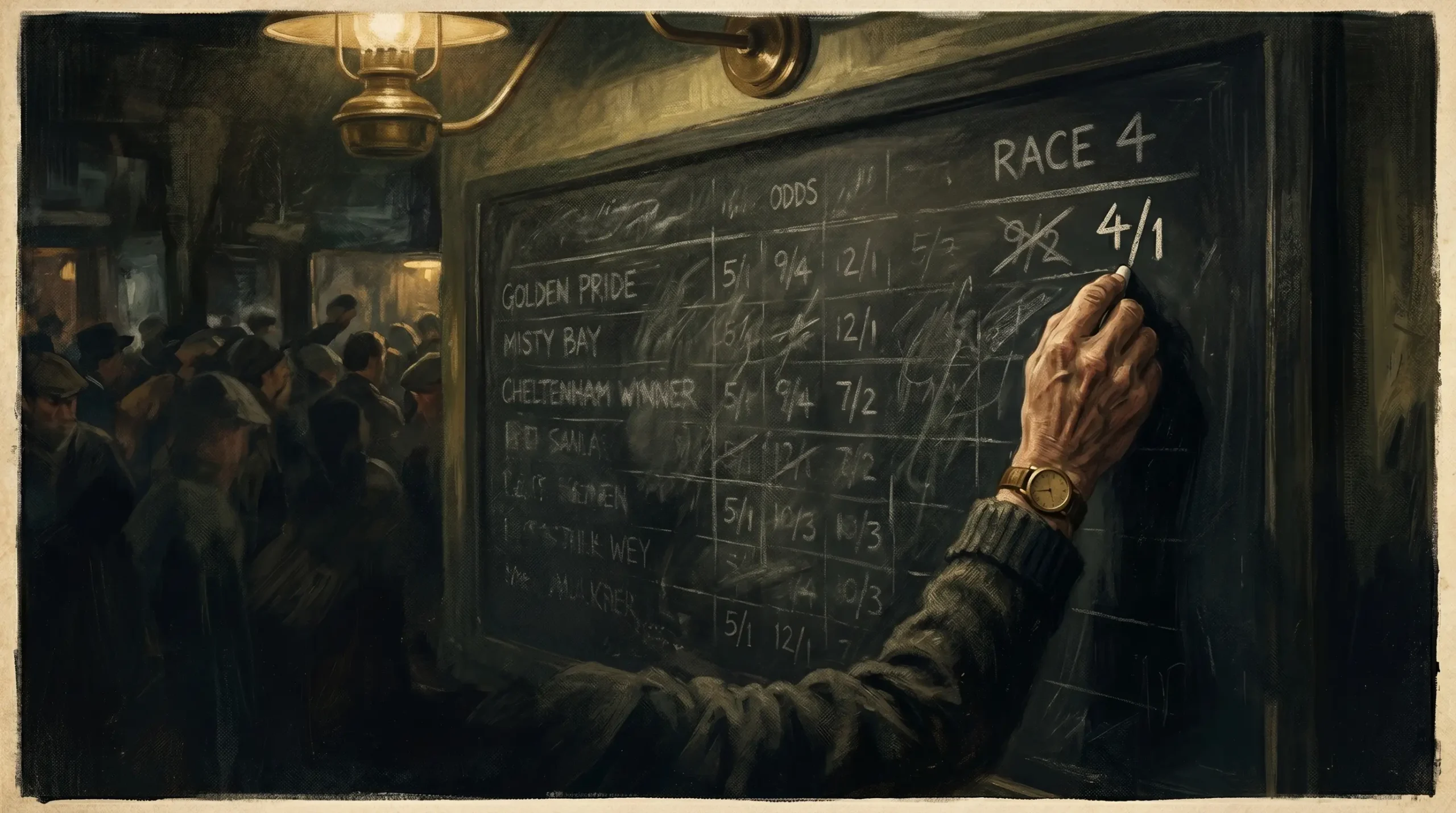
  • The Newmarket Whisper Network: How Information Moves Through a Training Town

    The Newmarket Whisper Network: How Information Moves Through a Training Town

    There are places in Britain where racing is a sport, and there is Newmarket, where it is the entire economy, the architecture, the rhythm of the day. To understand how stable information moves — how a private impression formed on the gallops at dawn becomes, weeks later, a quiet contraction in a betting market — it helps to understand a town built entirely around horses. Newmarket is not where racing happens to take place. It is where racing lives, and where the whispers begin.

    Some 3,500 horses are trained here at any given time, across dozens of yards, worked over thousands of acres of manicured heath that has been used for the purpose for four centuries. The town exists in service of them. The result is a concentration of knowledge unmatched anywhere in British racing — and a network of people who carry that knowledge, often without ever intending to trade in it.

    The Town That Wakes Before Dawn

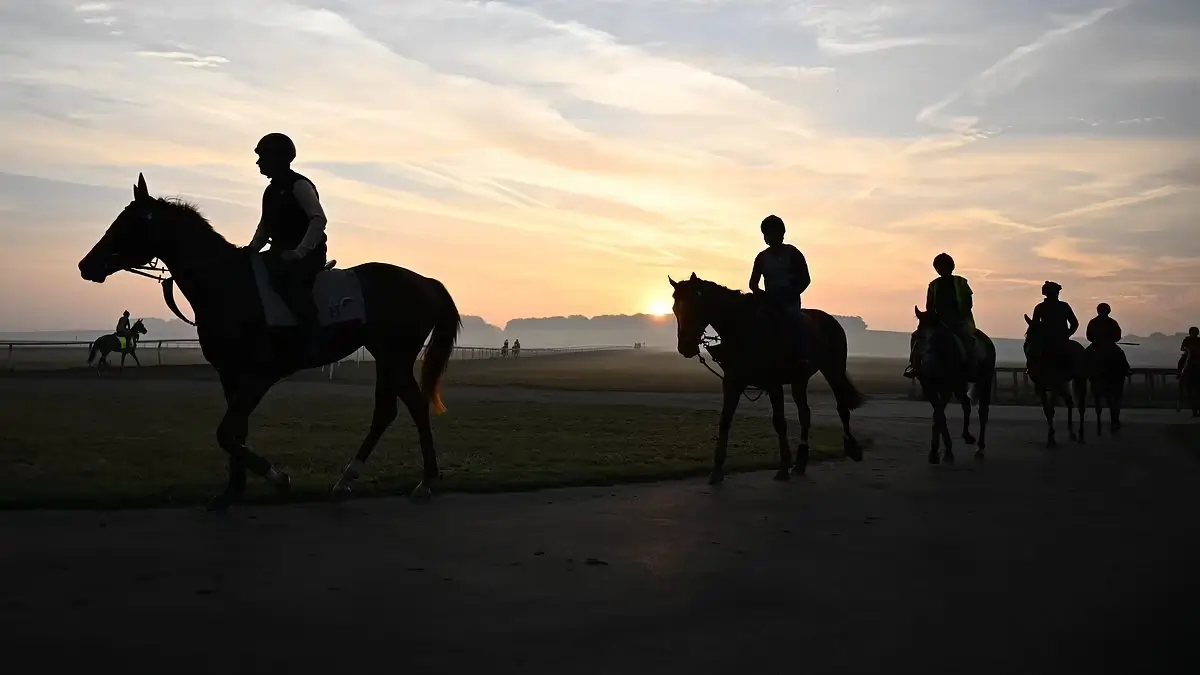
    The Newmarket day begins in darkness. By the time most of Britain is asleep, the strings are pulling out — long lines of horses making their way from the yards through the town and out onto the gallops, lads and lasses muffled against the cold, the only sound the clatter of hooves on the walkways that thread between the roads.

    It is on the heath, in those first grey hours, that the rawest racing intelligence is formed. A work rider feels a horse travel within itself, doing easily what should have stretched it. A trainer watches a once-fragile gelding finally move with freedom. A two-year-old, barely raced, works upsides a proven performer and is not found wanting. None of this is written down. None of it appears in any form book. It exists only as impression, held in the minds of the small number of people who were there to see it.

    This is the source. Everything downstream — the market move, the whisper passed between friends, the confident note in a trainer’s voice when asked about a horse’s chance — flows from these private moments on the heath that the public never sees. As we’ve discussed in the value of watching morning work, interpreting it is a skill of its own. But Newmarket is where so much of it originates.

    How Knowledge Becomes a Whisper

    Knowledge, in Newmarket, is not kept in vaults. It is carried by people, and people talk. Not recklessly — the genuinely useful sources understand the value of discretion, and a stable lad who broadcasts everything he sees finds the information drying up quickly. But a training town is a small world. The same faces appear in the same cafés at the same early hours. Riders move between yards over the years. Families have worked in the industry for generations. Knowledge seeps, slowly and selectively, through a dense web of relationships built over decades.

    A whisper, in this sense, is rarely a single dramatic revelation. More often it is an accumulation — a tone, an absence of the usual caution, a horse being spoken of more warmly than its form would suggest. Those attuned to the town’s rhythms learn to read these subtleties. They are not buying tips; they are reading a community that knows its own horses intimately and cannot entirely conceal what it knows.

    The danger, of course, is amplification. We’ve written before about the echo chamber effect, and a training town is fertile ground for it. A modest, accurate impression — “he’s working nicely” — can pass through a dozen retellings and emerge as something far more emphatic than the original observation ever justified. The discipline of the serious observer is to seek the source, not the echo, and to weigh information by the reliability of who carries it rather than by how loudly it arrives.

    The Heath as a Closed System

    What makes Newmarket distinctive is that it is, in informational terms, almost a closed system. The horses are trained here, worked here, and much of the knowledge about them is held here, within the town’s boundaries, for a long time before it reaches the wider world. A horse can work brilliantly on the Limekilns in February and not reveal that ability on a racecourse until April. For those two months, the truth about that horse lives in Newmarket and almost nowhere else.

    This is the structural reason a training town generates such valuable intelligence. The information advantage is not a matter of secrecy or impropriety — it is simply geography and time. The people who see the horse every day know it better than any form line can convey, and there is an unavoidable lag before that private knowledge becomes public fact. It is in that lag that genuine edges exist, for those positioned to perceive them.

    When the knowledge finally does begin to move — when a horse is entered, declared, and primed for its target — it often shows first not in any public statement but in the market itself. The steady, unexplained contraction we’ve described elsewhere is frequently the visible surface of something that was understood in Newmarket weeks earlier. The market is the last link in a chain that began on the heath in the dark.

    Lambourn, the Curragh, and the Wider Map

    Newmarket is the largest and most famous of Britain’s training centres, but it is not the only one. Lambourn, tucked into the Berkshire downs, serves as the spiritual home of much of British jump racing and operates on the same principles — a concentrated community, an intimate knowledge of its horses, the same dawn rituals on the gallops. The Curragh in Ireland plays a comparable role across the Irish Sea, and the flow of information between Irish training centres and British betting markets is, as we’ve noted, one of the most significant dynamics in the sport.

    Each of these places functions as its own whisper network, its own closed system of knowledge with its own rhythms and its own reliable and unreliable voices. The principle is universal even where the geography differs: where horses are trained in concentration, knowledge concentrates too, and a portion of it inevitably leaks — quietly, selectively, and always ahead of the public.

    Reading the Town Without Living in It

    Few who follow racing will ever stand on the Newmarket gallops at dawn. The good news is that you do not have to live in a training town to benefit from understanding how one works. The lesson is in the structure: that genuine intelligence forms privately and early, that it moves through people rather than announcements, that it is best weighed by source rather than volume, and that it surfaces in the market before it surfaces anywhere public.

    Understanding that chain — from the impression on the heath, through the network of those who carry it, to the eventual movement in the price — is what separates reading a market with insight from merely reacting to it. The whispers of Newmarket have shaped British racing for four centuries. They are quieter than the racecourse roar, and infinitely more informative, for those who learn to listen for them.


    Disclaimer: Gambling can be addictive and should only be undertaken responsibly by adults. Never bet more than you can afford to lose. For help with problem gambling, contact BeGambleAware (0808 8020 133) or GamCare. StableWhispers.co.uk provides information and entertainment but does not guarantee returns. All betting carries risk. 18+ only.

  • The Ante-Post Coup: How Long-Range Betting Markets Reveal Stable Intent

    The Ante-Post Coup: How Long-Range Betting Markets Reveal Stable Intent

    The on-course betting ring tells you what the public thinks in the final fifteen minutes before a race. The ante-post market tells you what a handful of well-informed people decided months ago, before the public had even glanced at the card. For anyone interested in how genuine intelligence moves through racing, the ante-post market is the most revealing place to look — because it is where money is committed when conviction is at its highest and the price has yet to be corrected.

    Ante-post betting means backing a horse weeks, sometimes months, ahead of the race, long before final declarations. The risk is obvious: a horse may not run at all, and the stake is usually lost if it doesn’t. But that same risk is precisely what makes the ante-post market so honest. Nobody commits serious money to a horse that might never line up unless they hold a strong view about both its ability and its likely participation. Casual punters rarely bother. The result is a market shaped disproportionately by connections, professional layers, and those with a genuine reason to be early.

    Why Early Money Matters More

    We’ve discussed elsewhere how early market moves tend to carry more information than late support. The ante-post market is that principle in its purest form. A horse that contracts steadily in the ante-post lists over several weeks — quietly, without an obvious public catalyst — is telling you something that the day-of-race market often won’t reveal until the prices have already adjusted.

    The reason is structural. Bookmakers price ante-post markets cautiously and with limited liability appetite. When informed money arrives, it arrives against thin books and tentative prices. A trainer confident that a horse is being primed for a particular target, or connections who have watched a young horse work exceptionally on the gallops through the winter, can secure value in the ante-post market that simply will not exist once the wider public arrives on raceday. They take the price early precisely because they expect it to be gone later.

    This is the quiet end of racing intelligence. There is no drama, no steamer flashing across the exchange in the final minutes — just a price that was 16/1 in January and is 8/1 by March, with no headline to explain the difference. Those gradual, unexplained contractions are among the most reliable signals in the sport.

    The Festival Ante-Post Market: A Case Study in Stable Confidence

    Nowhere is ante-post intelligence more concentrated than in the long build-up to the Cheltenham Festival. The major Festival races trade ante-post for the entire season, and the price journeys of individual horses become a slow-motion record of where serious money believes the value lies.

    Irish-trained horses, in particular, often see their strongest support emerge first in Irish ante-post markets, weeks before British layers catch up. Money that appears for a Closutton or Cullentra runner months out — money that holds firm through the season rather than coming and going — usually reflects something more durable than media enthusiasm. The yards that dominate the Festival plan their campaigns with a single target in mind, and the betting often tracks that planning long before it becomes public knowledge.

    The discipline is in distinguishing two different things. A horse that drifts and contracts repeatedly, bouncing around the ante-post lists, is being moved by speculation and sentiment rather than information. A horse that contracts once and then holds, or contracts steadily in one direction over many weeks, is being moved by conviction. The shape of the price journey matters more than the price itself.

    Reading the Non-Runner Signal

    Ante-post markets also reveal intent through absence. When a horse that has been prominent in the ante-post lists for a particular race is suddenly withdrawn — rerouted to a different target, or simply eased out of a market — that movement carries information too. Sometimes it indicates a setback. More often, with the better-planned operations, it signals that connections have identified a more favourable opportunity elsewhere and are preserving the horse for it.

    The reverse is equally telling. A horse that appears unexpectedly in an ante-post market it had no prior entry for, particularly when a supplementary entry fee has been paid to get it there, is rarely a casual decision. Supplementary entries are expensive and deliberate. When connections pay to add a horse late, and the market responds with support, the two facts together usually point to genuine confidence that the opportunity justifies the outlay.

    The Risk That Keeps the Market Honest

    It would be a serious error to treat ante-post intelligence as a shortcut to certainty. The non-runner risk is real and unforgiving. Ground can turn, fitness can fail, a preferred target can change, and the stake is gone with the horse that never runs. This is the central trade-off of all ante-post betting, and it is why the market remains the preserve of those willing to accept that risk in exchange for a price the raceday market will never offer.

    That same risk is what makes the signal trustworthy. A market this costly to be wrong in does not attract idle money. The conviction required to commit early is itself the information. As with every form of stable intelligence, the right frame is probability, not prophecy: ante-post support shifts the odds of a well-prepared horse arriving primed at its target, but it guarantees nothing. Horses are living creatures, plans change, and even the most confident connections are sometimes wrong.

    What the Ante-Post Market Teaches the Patient Observer

    The lesson of the ante-post market is the lesson of racing intelligence generally, only slowed down and made visible. The smartest money moves first, moves quietly, and moves on conviction rather than noise. It accepts a real cost — the chance of a lost stake — in return for a price that reflects information the wider market has yet to absorb.

    For the patient observer, the ante-post lists are a months-long ledger of where genuine confidence is being placed. Read alongside solid form analysis and an understanding of how connections plan their campaigns, the steady contractions, the firm-held prices, and the deliberate late entries form a quiet narrative of intent that is written long before the public ever arrives at the racecourse.

    The on-course ring will always be louder. But the real conversation, the one that matters, happened months earlier — in the ante-post market, in near silence.


    Disclaimer: Gambling can be addictive and should only be undertaken responsibly by adults. Never bet more than you can afford to lose. Ante-post stakes are typically non-refundable if your selection does not run. For help with problem gambling, contact BeGambleAware (0808 8020 133) or GamCare. StableWhispers.co.uk provides information and entertainment but does not guarantee returns. All betting carries risk. 18+ only.

  • What Are Stable Whispers? Inside Information in UK Horse Racing

    Stable WhispersIn horse racing, the smart money talks. Stable Whisper’s listens. In the shadowy corridors of racing stables, over early morning gallops on frost-covered turf, and in the hushed conversations between trainers and trusted connections, information flows that can make or break fortunes.
    This is the world of stable whispers, the inside knowledge that separates those in the know from the betting public, the intelligence that transforms ordinary races into legendary betting coups.

    British horse racing has always been as much about information as horseflesh. For centuries, astute trainers, crafty owners, and well-connected punters have orchestrated elaborate gambles, patiently preparing horses for specific targets while keeping their true intentions hidden from bookmakers and the betting public

    These racing coups represent the highest art of racing strategy, combining training skill, tactical cunning, and nerves of steel to land substantial wagers when the moment is right.

    Understanding stable whispers requires more than simply hearing tips. It demands knowledge of racing patterns, trainer form, market behaviour, and the subtle signs that separate genuine information from paddock gossip. Whether you’re a seasoned racing professional or an enthusiastic amateur seeking an edge, comprehending how inside information operates in British racing provides invaluable insight into this complex and fascinating sport.

    What Are Stable Whispers?

    Defining Inside Information

    A stable whisper is inside information originating from racing yards knowledge about a horse’s wellbeing, fitness, training progress, or intended plans that isn’t yet public knowledge. This intelligence might reveal that a horse has been specifically prepared for a particular race, has been working exceptionally well at home, has overcome previous problems, or is ready to show significant improvement on previous form.

    Genuine stable whispers come from sources close to the horse. Trainers, stable staff, work riders, owners, or their trusted associates. These insiders possess first-hand knowledge unavailable to the betting public. They’ve watched the horse work on the gallops, seen its condition improve, observed its attitude change, or been privy to the trainer’s tactical planning.

    The Value of Genuine Information

    Authentic inside information holds tremendous value because it reduces uncertainty. Racing is inherently unpredictable, horses are living creatures whose form fluctuates, who can be affected by ground conditions, distance, opposition, or simply having an off day. Genuine stable intelligence provides advance warning when a horse is primed to perform at its peak, offering a significant advantage over punters relying solely on public form.

    However, the racing world is also awash with false whispers, deliberate misinformation, and genuine tips that simply don’t materialise because horses don’t read the script. The ability to distinguish reliable information from noise separates successful racing insiders from those who lose money chasing every supposed “good thing” they hear.

    Types of Stable Intelligence

    Inside information takes various forms. A whisper might concern a horse’s recovery from injury, indicating it’s now sound and ready to resume winning ways. It might reveal that a lightly-raced horse has been showing exceptional home work and is ready to progress significantly. Sometimes the information concerns race planning, knowledge that a horse is being specifically prepared for a particular event, perhaps deliberately run below par in earlier outings to preserve a favourable handicap mark.

    Other whispers relate to tactical changes, a switch to different going, a step up or down in distance, the booking of a particular jockey, or the application of equipment like blinkers or tongue ties. These changes often signal that connections believe they’ve found the key to unlocking improvement. When such whispers are accompanied by solid stable support in the betting market, they become particularly significant.

  • The Rich History of Racing Gambles in Britain

    The Rich History of Racing Gambles in Britain

    The Golden Age of Betting Coups

    British racing’s history is peppered with legendary gambles that have passed into folklore. In earlier eras, when communication was slower and betting markets less efficient, elaborate coups were more easily executed. The Victorian and Edwardian periods saw some of the sport’s most audacious schemes, with owners and trainers orchestrating complex operations involving multiple horses, disguises, false entries, and coordinated betting across the country.

    These historical gambles often involved running horses under assumed names, entering ringers (superior horses masquerading as inferior ones), or deliberately running horses badly in preparation races before backing them heavily when properly fancied. While such practices would be impossible today given modern regulation and horse identification technology, they established racing’s reputation as a sport where sharp operators could outwit the establishment.

    The Development of Racing Intelligence Networks

    As racing became more organized and regulated, the methods of executing gambles evolved. Rather than outright deception, successful punters developed intelligence networks, relationships with stable staff, work riders, and other insiders who could provide legitimate information about horses’ wellbeing and preparation. These networks became invaluable for those seeking an edge in betting markets.

    The post-war period saw the emergence of professional punters who made their living from racing intelligence. These individuals cultivated sources in major racing centres like Newmarket, Lambourn, and the Curragh. They understood that consistent profitability came not from backing every tip but from selective betting when genuine strong information coincided with favourable prices.

    Modern Era: Technology Meets Tradition

    Today’s racing landscape has been transformed by technology, betting exchanges, and instant global communication. Information travels faster than ever, making it harder to achieve the betting coups of old. Yet stable whispers remain valuable, perhaps more so than ever given the sophisticated analysis required to profit in modern betting markets.

    The introduction of betting exchanges like Betfair revolutionised how inside information manifests in markets. Nowadays, significant stable support often appears as money for a horse both to back and to lay, as different parties with varying levels of information and confidence compete. Reading these market signals has become an art form in itself, with shrewd observers monitoring price movements and betting patterns to identify genuine stable confidence.

  • Legendary Racing Gambles and Betting Coups

    Legendary Racing Gambles and Betting Coups

    Barney Curley: The Master Gambler

    No discussion of racing gambles is complete without Barney Curley, the Irish trainer and professional punter who orchestrated some of the most famous betting coups in British racing history. Curley’s operations were legendary for their planning, execution, and sheer audacity.

    His most famous coup occurred on June 26, 1975, at Bellewstown in Ireland. Curley targeted a modest race with his horse Yellow Sam, a 20-1 shot that he knew was capable of winning. The genius lay in the execution. Curley stationed associates at the track’s only public telephone boxes, keeping them engaged in lengthy calls to prevent bookmakers from communicating with their head offices and adjusting prices.

    Meanwhile, a team of punters placed bets at betting shops across Ireland and Britain, all coordinated to strike within a short window. Yellow Sam duly won, and Curley landed bets totalling around £300,000. A fortune in 1975, equivalent to several million pounds today.

    Curley repeated his success multiple times throughout his career. In 2010, he orchestrated a four-horse coup involving horses running simultaneously at different tracks. Using betting exchanges and carefully timed bets, he reportedly won around £3 million. His gambles combined thorough preparation, tactical nous, and an intimate understanding of betting markets, the hallmarks of a master operator.

    The Gay Future Affair

    One of racing’s most infamous coups occurred on August 26, 1974, involving a horse named Gay Future. The scheme was breathtakingly complex. Gay Future, trained in Scotland, was entered in a novice hurdle at Cartmel, a remote track in Cumbria. The conspirators also entered two other horses at different tracks as part of a treble bet, but these were never intended to run—they were merely decoys to disguise the true target.

    Gay Future had been secretly schooled over hurdles in Scotland and was far better than his odds suggested. On race day, a different horse was shown in the parade ring, while the real Gay Future was smuggled onto the course separately. The betting was orchestrated from Ireland, with large sums wagered in trebles and doubles involving the non-runner decoys. Gay Future won easily at 10-1, landing a substantial coup estimated at £300,000.

    The operation was eventually uncovered, leading to court proceedings and lifetime bans for those involved. While celebrated in racing folklore for its ingenuity, the Gay Future affair also demonstrated how regulation has tightened to prevent such elaborate deceptions. Modern microchipping and passport controls make such ringers impossible today, though the story remains racing’s most talked-about betting coup.

    Desert Orchid’s Christmas Hurdle

    Not all gambles involve subterfuge. Sometimes, astute connections simply identify the perfect opportunity for a horse they know is well-handicapped or particularly suited to specific conditions. Desert Orchid, who became one of National Hunt racing’s greatest heroes, provided his trainer David Elsworth with a memorable gambling opportunity early in his career.

    Before Desert Orchid became famous, Elsworth knew the grey gelding possessed exceptional ability. In the 1983 Christmas Hurdle at Kempton, Desert Orchid was well-fancied by his connections despite relatively long odds. Strong stable support saw his price contract significantly before the race, and Desert Orchid duly delivered, winning in impressive fashion. This represented a legitimate gamble based on genuine belief in a horse’s ability, the type of inside information that doesn’t break rules but still provides an edge.

    Frankie Dettori’s Magnificent Seven

    September 28, 1996, provided one of racing’s most extraordinary sequences, though not a planned gamble in the traditional sense. Frankie Dettori rode all seven winners at Ascot’s Festival of British Racing meeting, a feat unprecedented in modern British racing. While Dettori himself had backed his mounts in an accumulator as a “fun bet,” bookmakers were devastated by punters who’d backed the Italian jockey throughout the card.

    The final leg, Fujiyama Crest at 2-1 in the Gordon Carter Handicap, saw extraordinary scenes as the betting public piled on, attempting to complete their accumulators. Bookmakers faced massive liabilities, and some temporarily stopped taking bets. The Magnificent Seven cost betting firms an estimated £50 million and demonstrated how even without inside information, extraordinary sequences can create legendary gambling outcomes.

    More Recent Coups: The Betting Exchange Era

    Modern gambling coups necessarily operate differently given technological surveillance, betting exchange liquidity monitoring, and regulatory scrutiny. However, well-planned operations still succeed. In recent years, several high-profile gambles have landed, typically involving horses moving from one yard to another where they’ve shown dramatic improvement, or horses prepared specifically for valuable handicaps.

    Trainers like Nicky Henderson, Willie Mullins, and Paul Nicholls have all landed significant gambles by identifying well-handicapped horses and placing them in races where everything falls in their favour. These operations are perfectly legitimate, representing the trainer’s skill in placement and preparation rather than deception. The key is identifying horses whose official ratings don’t reflect their true ability, then engineering the perfect scenario for them to demonstrate their class.

  • Trainers and Owners Known for Well-Executed Gambles

    Trainers and Owners Known for Well-Executed Gambles

    The Master Tacticians of the Turf

    Certain trainers have built reputations as particularly shrewd operators who know how to maximize their horses’ chances and land significant bets. These individuals combine training skill with tactical acumen, understanding both how to prepare horses and how to place them where they can succeed at rewarding odds.

    Willie Mullins: The Festival Genius

    Irish maestro Willie Mullins has dominated the Cheltenham Festival for two decades, regularly landing substantial wagers on horses he’s specifically prepared for the meeting. Mullins’ modus operandi involves identifying talented horses, running them conservatively through the Irish season while keeping them fresh, then producing them in peak condition for Cheltenham.

    His gambles are rarely subtle, Mullins-trained horses are often heavily backed before major races as information leaks from his powerful Closutton stable. Yet even with shortened prices, his horses frequently justify market confidence.

    Notable examples include horses like Vautour, Douvan, and countless others who’ve landed significant coups at the Festival. Mullins’ stable whispers are among racing’s most reliable, with seasoned punters knowing that strong market support for a Mullins runner at Cheltenham often signals genuine confidence.

    Nicky Henderson: The Lambourn Legend

    Seven Barrows in Lambourn, Nicky Henderson’s training base, has produced countless Festival winners and landed numerous gambles. Henderson specializes in improving horses acquired from other yards, often transforming them into graded race winners. His stable whispers typically concern horses returning from injury or moving up significantly in class.

    Henderson’s biggest gambles often involve novice chasers with Cheltenham ambitions. He has a particular gift for preparing horses for specific championship races, with detailed planning months in advance. When Henderson is confident about a horse’s Festival prospects, the market usually responds with substantial support, and experienced punters know to pay attention.

    Gordon Elliott: The Cullentra Craftsman

    Gordon Elliott’s rise to prominence has been meteoric, establishing himself as one of National Hunt racing’s leading trainers. Like his Irish rival Mullins, Elliott has orchestrated numerous successful gambles, particularly at the Cheltenham Festival. His stable often houses horses whose ability exceeds their official ratings, making them dangerous betting propositions when conditions suit.

    Elliott’s gambles often involve horses that have shown promise in Ireland being unleashed at longer odds in Britain. His communication with owners and the betting public can be deliberately opaque, allowing him to secure favourable prices. When significant money appears for an Elliott runner, particularly at a major meeting, it usually merits serious attention.

    Alan King: The Barbury Castle Specialist

    Alan King has built a reputation as one of Britain’s most tactically astute trainers, particularly skilled at placing horses in winnable races at rewarding odds. King’s gambles often involve handicap chasers and hurdlers that he’s kept fresh and placed perfectly. He’s known for giving horses relatively light campaigns, keeping them handicap-friendly, then striking when conditions align.

    King’s stable whispers tend to be reliable, with significant market support usually indicating genuine confidence. His record at meetings like the Cheltenham Festival and Aintree demonstrates his ability to prepare horses for major targets, and seasoned punters monitor his runners closely when they appear in competitive handicaps.

    Shrewd Owners: The Men Behind the Money

    Successful gambles require not just skilled trainers but brave owners willing to back their horses substantially. Owners like J.P. McManus, Rich Ricci, and the late Trevor Hemmings have all landed significant coups over the years. These individuals maintain extensive strings with top trainers and possess the resources to back their horses seriously when connections are confident.

    McManus, in particular, has been involved in countless betting coups throughout his racing career. His green and gold silks are synonymous with well-backed favourites at major meetings, and when McManus horses receive strong market support, it usually originates from the owner’s own confidence. His betting operations are sophisticated, often involving coordinated strikes across multiple betting mediums to maximize potential returns while minimizing market disruption.

  • How to Spot a Potential Gamble and Find Dark Horses

    How to Spot a Potential Gamble and Find Dark Horses

    Market Movements and Betting Patterns

    The most obvious indicator of a potential gamble is unusual market activity. When a horse’s price contracts sharply without apparent cause, no major jockey booking, no significant public trial, no obvious form boost, it suggests informed money entering the market. This is particularly significant when price movements occur early, before casual punters typically bet.

    On betting exchanges, monitoring both backing and laying patterns reveals sophisticated betting activity. Large sums matched at specific price points, significant market depth on the back side, and relatively little laying activity suggest genuine confidence. Conversely, horses being heavily layed (bet against) often indicate negative stable intelligence or attempts to manipulate markets.

    Trainer and Owner Patterns

    Understanding individual trainer tendencies helps identify when stable confidence might be building. Some trainers are serial gamblers who regularly back their horses; others rarely bet but, when they do, it’s significant. Tracking trainer betting patterns reveals which stables to monitor for genuine intelligence.

    Similarly, certain owner-trainer combinations consistently land gambles. When these partnerships target specific races, particularly valuable handicaps or championship events, heightened attention is warranted. Historical analysis of these combinations’ betting behaviour provides valuable context for interpreting current market movements.

    The Non-Runner Angle

    Sometimes the most revealing information concerns what doesn’t happen. When a previously-engaged horse is unexpectedly withdrawn from a race, it might indicate connections are preserving it for a bigger target where they plan to bet seriously. Serial non-runners from a stable, followed by an eventual appearance in a specific race, often signal careful campaign planning.

    The reverse also applies: when a horse unexpectedly appears in a race it wasn’t originally entered for, particularly after a supplementary entry fee is paid, it suggests connections have identified a winnable opportunity. These late entries often correlate with stable confidence and betting support.

    Jockey Bookings and Stable Jockeys

    The identity of a horse’s jockey provides crucial intelligence. When a stable jockey is replaced by a champion or specialist rider, it indicates connections are taking the race very seriously. Conversely, when a stable’s number one jockey rides an unfancied horse over a more obvious mount, it reveals which runner connections genuinely fancy.

    Claims made by apprentice or conditional jockeys sometimes hide gamblers’ intentions, as the reduced weight can transform a horse’s chance while maintaining longer odds. Experienced punters monitor these tactical bookings, recognizing them as potential indicators of stable planning.

    Racing Conditions and Course Specialization

    Stable whispers often concern horses being saved for ideal conditions. A trainer might know their horse excels on heavy ground, and preserve it through drier months for a winter target. Recognition of these condition preferences, combined with weather forecasts, helps identify when patience might be rewarded.

    Course specialization provides another angle. Some horses possess idiosyncratic form, performing brilliantly at specific tracks while ordinary elsewhere. When such horses appear at their favoured venue after absence or poor recent form, it often coincides with stable confidence and betting support.

    Dark Horses: The Hidden Champions

    What Makes a Dark Horse?

    In racing parlance, a “dark horse” refers to a lightly-raced or previously unconsidered runner that possesses ability exceeding its public form. These horses might have been deliberately kept under the radar, run in unsuitable conditions, or simply not yet had the opportunity to demonstrate their true capability. Dark horses represent the ultimate stable whisper, horses about whom the betting public knows little but connections know plenty.

    The Lightly-Raced Improver

    Young horses with limited experience often provide dark horse opportunities. A horse might have run once or twice, showing promise without winning, then spent months training at home where they’ve improved dramatically. When such horses reappear, particularly with strong market support, they can prove difficult to oppose despite modest form figures.

    National Hunt racing particularly favours these scenarios. Novice hurdlers and chasers might have limited form over obstacles but extensive schooling at home. When they encounter proper racing conditions for the first time, improvement can be substantial. Trainers with reputations for improving young jumpers—Paul Nicholls, Nicky Henderson, Willie Mullins, regularly produce dark horses that justify strong stable confidence.

    The Transformed Recruit

    Horses moving between trainers often provide dark horse betting opportunities. A horse performing moderately in one yard might thrive when relocated, particularly if the move involves better facilities, different training methods, or simply better understanding of the horse’s needs. These transformations can be dramatic, with horses progressing from plodders to pattern race winners.

    Market-savvy punters monitor private sales and trainer movements, recognizing that astute operators acquiring horses from smaller yards might have identified latent ability. When such horses reappear after several months with new connections, often at longer odds reflecting their previous moderate form, they can represent genuine value if the new trainer has genuine confidence.

    The Patiently-Campaigned Handicapper

    Some dark horses are hidden in plain sight, regular runners whose connections have deliberately managed their handicap rating. These horses might be run below their best, ensuring they drop to a winnable mark before being produced in peak condition for a targeted gamble. While such practices operate in grey areas ethically, they remain part of racing’s tactical landscape.

    Recognizing these horses requires understanding handicap patterns. A horse that runs consistently without threatening to win, then suddenly appears with different equipment, a changed race distance, or significantly improved odds, might have been deliberately placed in a favourable position. When stable support accompanies these factors, the combination often proves profitable.

  • Cheltenham Festival and Royal Ascot: The Premier Gambling Stages

    Cheltenham Festival and Royal Ascot: The Premier Gambling Stages

    The Biggest Betting Week in Racing

    The Cheltenham Festival represents British racing’s pinnacle, four days of championship jump racing that attracts more betting turnover than any other meeting. For trainers, owners, and professional punters, Cheltenham is the ultimate target, the place where well-planned gambles can deliver life-changing returns.

    The Festival’s unique character makes it ideal for gambling coups. Horses are often specifically prepared for single races, sometimes receiving light campaigns throughout the season to preserve their handicap marks or maintain peak fitness for Cheltenham. This concentrated preparation, combined with the Festival’s massive betting markets and enhanced prize money, creates perfect conditions for well-executed gambles.

    Famous Cheltenham Gambles

    The Festival has witnessed countless legendary gambles. Dawn Run’s Champion Hurdle in 1984 saw massive Irish support for Paddy Mullins’ mare, with punters braving terrible weather to back her. She won in heroic style, landing substantial bets and becoming one of jumping’s immortals.

    More recently, horses like Sprinter Sacre, Vautour, and Douvan have all been subject to enormous gambles, with their connections backing them heavily before championship victories. These weren’t subtle operations, market support was obvious and sustained. Yet even with shortened prices, these horses delivered, demonstrating that sometimes the best information is the most public.

    The Festival’s competitive handicaps provide particular gambling opportunities. Races like the Coral Cup, the County Hurdle, and the Pertemps Final regularly see substantial coups landed by astute trainers who’ve identified well-handicapped horses. Willie Mullins, in particular, has orchestrated numerous successful handicap gambles, often with horses given careful preparation to arrive at the Festival with favourable racing weights.

    Reading Festival Market Movements

    Cheltenham’s ante-post markets provide fascinating insight into stable confidence. Monitoring which horses see sustained support weeks or months before the Festival reveals where serious money is being invested. Irish-trained horses typically see strongest support from Irish bookmakers and betting exchanges, while British-trained runners might see heavier domestic support.

    The key is distinguishing genuine stable confidence from media hype and public sentiment. Horses that gradually contract in price over weeks, with consistent money appearing across multiple betting platforms, typically indicate informed support. Conversely, horses whose prices fluctuate wildly, shortening and drifting repeatedly, might simply be subject to speculative betting rather than genuine inside information.

    Royal Ascot: Flat Racing’s Premier Gambling Stage

    The Summer Spectacular

    If Cheltenham dominates National Hunt gambling, Royal Ascot holds equivalent status for Flat racing. The five-day June meeting combines championship races, valuable handicaps, royal pageantry, and enormous betting turnover. For trainers targeting specific Ascot races, careful campaign planning throughout the early season can position horses perfectly for substantial gambles.

    Handicap Opportunities

    Royal Ascot’s competitive handicaps, the Royal Hunt Cup, the Wokingham Stakes, the Britannia Stakes attract massive betting interest and regularly see successful gambles landed. These races reward astute trainers who’ve managed their horses’ handicap marks carefully, keeping them competitive while preserving relatively favourable ratings.

    Trainers like Sir Michael Stoute, John Gosden, and Aidan O’Brien have all landed significant Ascot gambles over the years. Their operations combine training excellence with tactical sophistication, identifying races where their horses can compete effectively while offering value odds. When market support appears for horses from these powerhouse stables, particularly in handicaps, it merits serious attention.

    Group Race Gambles

    While handicaps provide traditional gambling opportunities, Royal Ascot’s Group races occasionally witness significant coups. These typically involve horses stepping up dramatically in class, international raiders arriving with strong form, or three-year-olds making faster-than-expected improvement. The Commonwealth Cup, for instance, has seen several gambles landed on speedsters whose connections knew they possessed Group race ability despite modest odds.

  • Understanding Market Movers and Betting Strategies

    Understanding Market Movers and Betting Strategies

    What Causes Horses to Shorten in Price?

    Market movers, horses whose odds contract significantly before racing can result from various factors. Genuine stable confidence represents the most valuable cause, but other influences include media tipsters, public following of fashionable trainers or jockeys, or simply bandwagon effects where price contractions encourage further betting. Distinguishing between these causes determines whether a market move merits following.

    Early Market Moves vs. Late Support

    The timing of market movements provides crucial intelligence. Early moves occurring when betting markets first open, often days before racing, typically indicate informed money. Professional punters and stable connections bet early to secure best available prices. These moves often originate from those with genuine inside knowledge.

    Conversely, late money, heavy betting in the final minutes before racing can indicate various things. Sometimes it represents delayed stable confidence, with connections waiting until the last moment to avoid shortening prices prematurely. Other times it reflects betting shop punters following media tips or making impulsive decisions. Understanding these patterns helps interpret whether late market movements merit attention.

    Steam Moves and Coordinated Betting

    “Steamers” describes rapid, dramatic price contractions resulting from coordinated heavy betting. These moves often indicate serious gambling operations, with multiple parties placing substantial bets simultaneously across different betting platforms. Steam moves can overwhelm bookmakers’ risk management systems, causing dramatic price adjustments.

    On betting exchanges, steam appears as sudden large sums being matched at specific prices, often exhausting available liquidity and forcing prices to contract sharply. These movements typically indicate genuine confidence rather than casual betting, making them particularly significant for those seeking reliable stable whispers.

    The Drift: When Horses Lengthen in Price

    Not all market movements involve shortening prices. When horses drift, lengthen in odds, it can indicate negative stable intelligence. Perhaps the horse isn’t travelling well to the course, conditions aren’t ideal, or connections have received disappointing news about fitness or wellbeing. Significant drifts, particularly for previously well-supported horses, warrant attention as potential indicators of problems.

    However, some drifts result simply from betting imbalances, with bookmakers adjusting odds to encourage betting on horses receiving little support. Distinguishing between these scenarios requires understanding individual bookmaker practices and monitoring multiple betting platforms simultaneously.

    Betting Strategies Around Stable Information

    How to Use Stable Whispers Wisely

    Receiving genuine stable information is only half the battle; using it effectively determines profitability. The cardinal rule is recognizing that no horse is certain to win, regardless of how confident connections appear. Even the strongest stable whispers can be undone by bad luck in running, unsuitable ground, or simply being beaten by a better horse.

    Successful punters treat stable information as probability enhancers rather than certainties. A strong stable whisper might shift a horse’s winning chance from 20% to 40%, making it excellent value at 3-1 but still twice as likely to lose as win. Understanding probability and value is essential for long-term profitability from stable intelligence.

    Early Betting vs. Waiting for SP

    When should you bet on a fancied runner? Early betting secures best prices but risks tying up funds if circumstances change. Waiting until closer to racing allows incorporating late information but risks accepting shortened prices. The optimal approach depends on several factors.

    For horses with solid stable support that are likely to shorten significantly, early betting makes sense. Securing 6-1 about a horse certain to start at 3-1 provides substantial value edge. Conversely, for horses where market confidence seems less certain, waiting allows incorporating additional intelligence and potentially securing improved prices if the horse drifts.

    Each-Way Betting and Place Value

    For competitive handicaps and races with large fields, each-way betting provides attractive proposition when backing stable whispers. Each-way bets pay returns if horses finish in the first three or four places (depending on field size), offering insurance against being narrowly beaten. Given that even strongly-fancied horses can finish second or third, each-way betting often provides better value than win-only propositions.

    Comparing each-way terms across different bookmakers reveals value opportunities. Some bookmakers offer enhanced place terms (paying to four places instead of three, or paying at better fractions of win odds), significantly improving potential returns. Savvy punters always check place terms before committing to each-way bets.

    Dutching and Multiple Stable Whispers

    When receiving multiple stable whispers for the same race, not uncommon at major meetings, dutching (betting on multiple horses in proportions ensuring equal profit regardless of which wins) offers a sophisticated approach. This strategy requires careful calculation to ensure the combined odds provide value, but can reduce risk when uncertain which of several fancied runners to back.

    Responsible Gambling Considerations

    However reliable stable information might seem, responsible gambling principles always apply. Never bet more than you can afford to lose. Establish betting banks separate from essential finances. Accept that losing runs occur even with genuine inside information. Track betting results honestly, recognizing that selective memory can distort perceptions of success.

    Professional punters maintain detailed records, calculating return on investment and identifying which types of bets prove profitable. This disciplined approach separates consistent winners from those who rely on hope and intuition. If betting stops being enjoyable or creates financial stress, seek help from organizations like GamCare or BeGambleAware.

    Combining Stable Whispers with Form Analysis

    Form as Foundation

    Stable whispers are most valuable when they complement rather than contradict solid form analysis. A horse with reasonable form credentials receiving strong stable support represents a better proposition than a horse with terrible form being talked up by connections. The best bets combine genuine ability (demonstrated through form) with stable confidence that the horse is ready to produce its best.

    Class and Conditions

    Understanding class levels helps contextualize stable confidence. A horse might work brilliantly at home and receive strong stable support, but if stepping up significantly in class, form analysis might suggest it still faces a stiff task. Conversely, a class horse dropping in grade represents an ideal gambling opportunity when connections are confident.

    Ground conditions, distance, course characteristics, and race pace all influence outcomes. The most reliable stable whispers typically concern horses being placed in optimal conditions where their attributes suit the race. Reading race conditions alongside stable intelligence identifies when everything aligns for a successful gamble.

    The Angle of Improvement

    Stable whispers often concern horses expected to improve on previous form. Understanding why improvement might occur—recovery from injury, equipment changes, distance alterations, or simply natural progression helps assess whether stable confidence is justified. Horses receiving strong market support despite modest form especially warrant analysis to identify potential improvement angles.

  • Avoiding Pitfalls and Building Your Intelligence Network

    Avoiding Pitfalls and Building Your Intelligence Network

    The Echo Chamber Effect

    In today’s interconnected racing world, information spreads rapidly through social media, forums, and messaging groups. A genuine stable whisper can quickly become amplified as it passes through multiple sources, creating false confidence. What starts as tentative stable optimism might transform into certainty as the whisper circulates, with each retelling adding conviction.

    This echo chamber effect shortens prices without necessarily reflecting genuine confidence increase. The original information might have been accurate but modest; the amplification creates betting pressure disproportionate to the actual intelligence. Savvy punters seek original sources and discount information that’s been repeatedly shared and embellished.

    The Deliberate Misinformation

    Not all stable whispers are honest. Sometimes connections deliberately spread false information to lengthen a horse’s price, allowing them to secure better odds when betting. Other times, misinformation spreads accidentally through misunderstood conversations or misinterpreted work reports. Distinguishing genuine intelligence from misinformation requires understanding sources’ reliability and track records.

    The “Unbeatable” Syndrome

    Perhaps the most dangerous pitfall is believing any horse is unbeatable, regardless of stable confidence. Racing’s unpredictability means that even horses working sensationally at home can disappoint. Freak accidents, unsuitable pace scenarios, bad luck in running, or simply having an off day can defeat the most talented horses.

    Professional punters respect racing’s uncertainty. They recognize that a 70% winning chance (which would make a horse phenomenal value at evens) still means losing three times in ten. Maintaining perspective about probability, even when holding excellent information, protects against the devastation that comes from overcommitting to “certainties” that don’t materialize.

    When Stable Confidence Proves Misplaced

    Trainers and owners sometimes misjudge their horses’ abilities or readiness. A horse working well at home might not reproduce that form in competitive racing. Training gallops differ fundamentally from racecourse pressure, and some horses fail to transfer their home ability to the track. Recognizing that even genuine stable confidence can prove misplaced helps maintain balanced betting approach.

    Building Your Own Intelligence Network

    Cultivating Reliable Sources

    For those serious about profiting from stable information, developing personal intelligence networks proves invaluable. This doesn’t mean pestering trainers or bribing stable staff, such approaches are counterproductive and potentially illegal. Rather, it involves building genuine relationships within racing communities, establishing credibility, and demonstrating that you can be trusted with sensitive information.

    Attending racecourses regularly, engaging respectfully with racing professionals, and demonstrating genuine knowledge about the sport helps build connections. Over time, relationships develop where information might be shared. However, this requires years of involvement and complete discretion, those who immediately broadcast every whisper they receive soon find sources drying up.

    Social Media Intelligence

    Social media has transformed information gathering in racing. Twitter, in particular, provides real-time updates on horse wellbeing, travel arrangements, declarations, and stable moods. Following trainers, stable staff, jockeys, and racing journalists provides valuable context around horses’ preparations and connections’ confidence levels.

    However, social media also amplifies misinformation and speculation. Developing discernment about which sources provide reliable information versus those dealing in rumour and clickbait is essential. Track records matter, accounts consistently providing accurate information merit attention; those frequently wrong should be ignored regardless of follower counts.

    Morning Gallops and Work Watching

    For those living near major training centres like Newmarket, Lambourn, or the Curragh, watching morning gallops provides firsthand intelligence. Observing how horses work, their physical condition, and their attitude offers insights unavailable from racecourse form. Many successful punters built their knowledge bases through decades of morning observation.

    However, interpreting work requires expertise. A horse might work impressively yet still not be race-ready. Conversely, mediocre work doesn’t necessarily indicate problems. Trainers often save horses’ best efforts for the racecourse. Understanding individual trainers’ methods and horses’ working patterns takes time but rewards persistent observers.

  • Technology, International Context and the Future of Racing Intelligence

    Technology, International Context and the Future of Racing Intelligence

    Betting Exchange Intelligence

    Betting exchanges revolutionised how stable information manifests in markets. Unlike traditional bookmakers who adjust prices based on liability management, exchanges directly reflect market sentiment through matched betting between punters. This creates transparency impossible in traditional betting markets.

    Sophisticated punters use exchange data to identify genuine stable confidence. Large sums being backed (particularly when matched rather than merely requested), minimal laying activity, and sustained support across multiple price points indicate informed money. Various software tools analyse exchange data in real-time, identifying significant market movements and betting patterns that might indicate stable activity.

    Data Analytics and Pattern Recognition

    Modern racing analysis increasingly employs data analytics to identify patterns invisible to casual observation. Tracking trainer statistics in specific conditions, analyzing jockey booking patterns, monitoring stable form cycles, and identifying optimal race conditions for individual horses all contribute to informed betting decisions.

    When data analytics suggests a horse is well-placed, and this analysis coincides with market confidence and potential stable whispers, the combination creates powerful betting propositions. Professional punters increasingly combine traditional stable intelligence with sophisticated statistical analysis, recognizing that both approaches complement each other.

    GPS and Training Technology

    Some modern trainers use GPS tracking and other technologies to monitor horses’ training precisely. While such data typically remains confidential, its existence means trainers possess unprecedented knowledge about their horses’ fitness and readiness. When trainers using such technologies express confidence, it often reflects more than subjective impressions, they possess objective data confirming their horses’ preparations.

    British Racing in International Context

    Irish Influence

    No discussion of British racing gambles is complete without acknowledging Irish influence. Irish trainers regularly raid British races, often with horses specifically prepared for particular targets. The flow of information between Irish and British racing creates complex intelligence networks, with Irish stable whispers frequently impacting British betting markets.

    Irish-trained raiders, particularly those from powerful stables like Willie Mullins or Gordon Elliott, command serious respect. When these horses receive strong support in British betting markets, it typically indicates genuine confidence backed by careful planning. The Cheltenham Festival exemplifies this dynamic, with Irish-trained horses regularly landing substantial gambles despite having to travel to Britain.

    French and International Raiders

    French-trained horses occasionally land significant gambles at British meetings, particularly at Royal Ascot and other high-profile fixtures. French form often proves difficult for British punters to assess accurately, creating value opportunities for those with reliable intelligence about French horses’ true abilities. When French trainers like André Fabre or Jean-Claude Rouget send horses to Britain, market support often indicates genuine confidence backed by superior form at home.

    The Future of Stable Whispers and Racing Intelligence

    Regulatory Evolution

    Racing regulation continues tightening, with authorities increasingly sophisticated in detecting improper practices. Modern rules around inside information, market manipulation, and betting by racing participants reflect concerns about integrity. While this makes traditional betting coups more difficult, it hasn’t eliminated them, merely evolved their execution.

    Future regulation will likely incorporate more technology-based monitoring, analyzing betting patterns for suspicious activity and investigating unusual market movements. However, legitimate tactical racing, preparing horses specifically for targeted races, remains perfectly acceptable. The challenge for regulators is distinguishing between clever training and preparation versus improper manipulation.

    Technological Advancement

    Emerging technologies will transform how stable intelligence operates. Advanced biometric monitoring might soon provide real-time data about horses’ physical condition and readiness. Artificial intelligence could analyze vast datasets identifying patterns invisible to human observers. Blockchain technology might create transparent betting markets where unusual activity is immediately apparent.

    These developments will make executing traditional betting coups more difficult while simultaneously creating new opportunities for those who adapt. Success will require combining traditional racing knowledge with technological sophistication, understanding both how horses perform and how modern markets function.

    The Enduring Value of Human Intelligence

    Despite technological advancement, human intelligence, actual knowledge from people close to horses—will remain valuable. Knowing a horse’s attitude, its quirks and preferences, how it’s responding to training, whether it’s thriving or struggling, such information comes from humans working daily with horses and can’t be fully captured by data alone.

    The future of stable whispers likely involves combining traditional human intelligence with modern technological analysis. Those who master both domains, understanding horses and racing while also exploiting technological tools will maintain advantages over both pure traditionalists and pure data analysts.

  • The Art and Science of Stable Intelligence

    The Art and Science of Stable Intelligence

    Stable whispers represent racing’s eternal quest for edge, the search for information providing advantage in uncertain markets. From the legendary coups of Barney Curley to the sophisticated operations of modern syndicates, the pursuit of inside intelligence has shaped British racing for centuries. Understanding how stable information operates, how to recognize genuine confidence, and how to use intelligence wisely separates successful punters from those who lose money chasing every rumoured “good thing.”

    The most important lesson about stable whispers is perspective. They’re neither guaranteed winning formulas nor worthless gossip, but rather probability modifiers that shift edges when used intelligently. A strong stable whisper about a well-fancied horse should inspire confidence but not certainty. Racing’s fundamental unpredictability means that even the strongest information comes with risk, and even the most carefully planned gambles sometimes fail.

    Success with stable intelligence requires combining multiple skills: understanding form and conditions, reading betting markets, cultivating reliable sources, maintaining discipline, and accepting that losing is inevitable even when doing everything right. Those who approach racing intelligence with humility, patience, and respect for the sport’s complexity position themselves to profit long-term. Those expecting easy money from occasional whispers inevitably face disappointment.

    British horse racing remains a sport where information matters, where careful planning can overcome bad luck, and where astute operators occasionally land life-changing gambles. The stable whispers circulating around Newmarket, Lambourn, and racing centres across Britain carry genuine value for those discerning enough to distinguish signal from noise. Whether you’re a casual racing enthusiast seeking occasional betting interest or a serious punter building a professional approach, understanding stable intelligence enriches your engagement with this magnificent sport.

    The tradition of racing gambles continues into the modern era, evolving rather than disappearing. Today’s Willie Mullins Festival gamble differs in execution from yesterday’s Barney Curley coup, but the fundamentals remain unchanged, a well-prepared horse, a carefully chosen target, confident connections willing to back their judgment, and the courage to strike when the moment arrives. These elements transcend technological change, regulatory evolution, and market sophistication. They represent racing’s essential drama: the contest between preparation and chance, between knowledge and uncertainty, between those who know and those who guess.

    As you follow British racing, whether at Cheltenham’s roaring crescendo or a quiet weekday meeting at Catterick, remember that behind every horse stands a network of connections, trainers, owners, stable staff, work riders whose collective knowledge about that horse far exceeds what form books reveal. Sometimes that knowledge translates into market confidence, stable whispers, and ultimately, successful gambles. Learning to recognize those moments when genuine intelligence aligns with favourable circumstances represents racing’s ultimate skill, the art of reading between the lines of form, sensing the undercurrents of market movements, and knowing when to trust the whisper you’ve heard.

    Disclaimer: Gambling can be addictive and should only be undertaken responsibly by adults. Never bet more than you can afford to lose. For help with problem gambling, contact BeGambleAware (0808 8020 133) or GamCare. StableWhispers.co.uk provides entertainment and information but does not guarantee returns. All betting carries risk.

  • Bookmakers Dominate the 2026 Sunday Times Tax List — But Storm Clouds Are Gathering

    Bookmakers Dominate the 2026 Sunday Times Tax List — But Storm Clouds Are Gathering

    The UK’s biggest betting names have once again featured prominently in the Sunday Times Tax List — but the industry faces a turbulent year ahead as sweeping tax hikes bite into profits.

    Betfred Brothers Claim the Top Spot

    The 2026 Sunday Times Tax List makes for remarkable reading for anyone with an interest in betting and gambling. For the first time, Fred and Peter Done — the brothers behind Betfred — have claimed the number one position, with an estimated tax contribution of £400.1 million. That’s a significant jump from £273.4 million the previous year, and roughly half of that figure is directly linked to gambling duties generated by Betfred’s nationwide chain of around 1,350 betting shops.

    Peter Done, aged 78, made clear he has no intention of joining the growing exodus of wealthy individuals leaving Britain for lower-tax jurisdictions. “We owe this country,” he told the Sunday Times — a refreshingly candid stance in a year when 14 of the list’s top 100 taxpayers are now resident overseas.

    The Coates Family at Number Five

    Denise, John and Peter Coates — the family behind online giant bet365 — come in at fifth place with a tax bill of £227.1 million. Denise Coates has historically topped this list in previous years, her personal tax contributions a direct reflection of bet365’s extraordinary profitability. The family’s combined net worth sits at around £7.46 billion, and Stoke-on-Trent remains home to one of the UK’s most quietly powerful betting empires.

    The Wider Industry Picture

    Beyond the headline names, the UK gambling industry as a whole remains a colossal contributor to the public finances. The top 100 taxpayers on the 2026 list collectively contributed a record £5.758 billion — with betting clearly punching well above its weight relative to its size as a sector.

    The major listed operators also carry significant tax footprints, even if their owners don’t appear on the personal tax list in the same way:

    • Flutter Entertainment (Paddy Power, Betfair, Sky Bet, FanDuel) — paid over £700 million in taxes to HMRC in their most recent year, employing more than 5,000 people in the UK.
    • Entain (Ladbrokes, Coral, Sportingbet) — one of the UK’s largest bookmaking groups with over 2,300 retail outlets.
    • Evoke (William Hill) — operating approximately 1,300 high street shops across Great Britain.

    The Tax Storm on the Horizon

    Despite these eye-watering contributions to the Treasury, the industry is bracing for a painful 2026 and beyond. The 2025 Autumn Budget delivered what many operators called a “devastating hammer blow”: online gaming duty is set to rise to 40% from April 2026, with a new 25% remote betting duty on online sports betting (excluding horse racing) following in April 2027.

    The reactions from major operators were stark:

    • Flutter warned of an adjusted earnings impact of approximately $320 million in 2026, rising to $540 million in 2027 before any mitigating action.
    • Entain estimated an annualised hit of around £200 million.
    • Evoke (William Hill) projected an annualised duty increase of £125–135 million.
    • Betfred’s Fred Done warned that a tax rate approaching 40% would leave “no profit in the business” and threatened all 1,287 of its UK shops if the hikes had been more aggressive.

    On the high street, the picture is already shifting. Flutter permanently closed 57 Paddy Power shops in late 2025, while William Hill threatened up to 200 further closures. Entain has acknowledged that some of its Ladbrokes and Coral branches are “barely viable” in the current environment.

    What This Means for Punters

    For those of us who follow the markets closely — and who understand that bookmaker behaviour is one of the most telling signals in the game — these are not trivial developments. When bookmakers face squeezed margins, the consequences flow downstream:

    • Reduced promotional offers and enhanced odds campaigns
    • Tighter margins on competitive markets
    • Fewer shops on the high street, particularly in smaller towns
    • Potential consolidation, with smaller operators most at risk

    There’s also the broader market integrity question. Several operators have argued — with some justification — that pushing up regulated duty rates drives activity toward unregulated offshore platforms, which pay nothing to the UK Exchequer and offer none of the consumer protections that licensed bookmakers are required to provide.

    The Bigger Picture

    The Sunday Times Tax List is a useful reminder that whatever one thinks of the gambling industry, its contribution to public finances is substantial and tangible. The Done brothers alone contributed more to the Treasury last year than many entire sectors. The Coates family’s bet365 continues to generate revenues that dwarf most UK businesses.

    At Stable Whispers, we watch all of this closely — because how bookmakers respond to external pressure is every bit as revealing as how they respond to market pressure. A bookmaker tightening its margins, reducing its offers, or restructuring its operations is sending signals. Those signals matter.

    As always, the smart money watches what bookmakers do, not just what they say.


    Want to understand how bookmaker behaviour reveals market intelligence before the off? Explore a Stable Whispers membership — our proprietary ratings cut through the noise to show you where the real money is moving.